
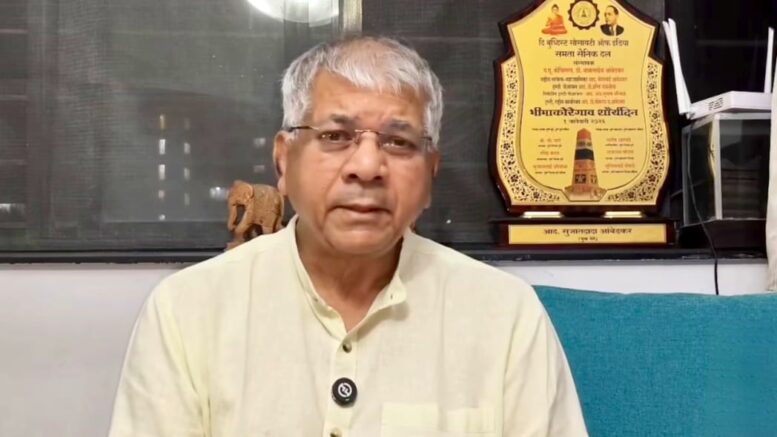
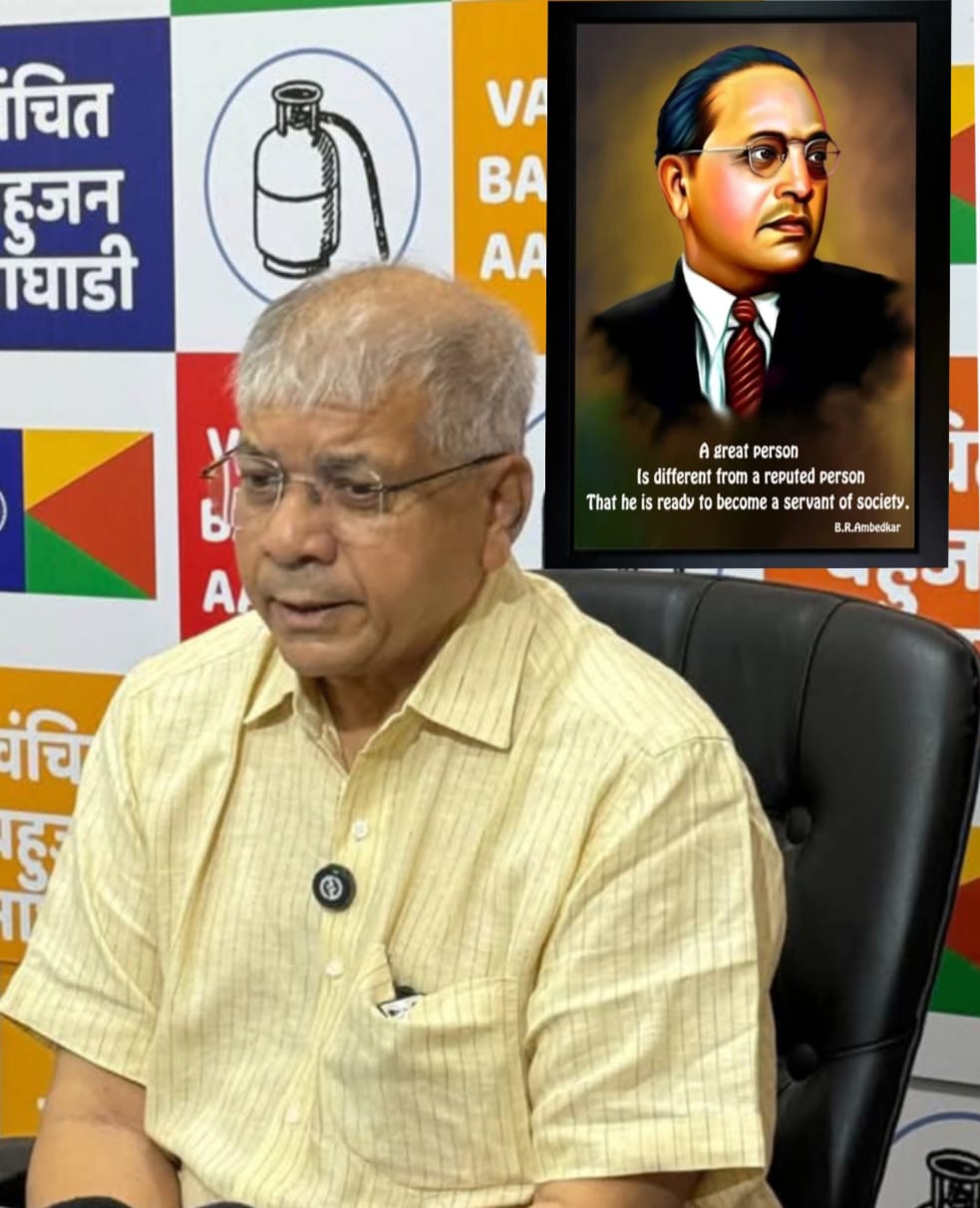
Prakash Ambedkar, Vanchit Bahujan Aghadi Chief
MUMBAI, GPN/ SACHIN MURDESHWAR 📞 8108510506: Prakash Ambedkar, a lawyer and chief of the Vanchit Bahujan Aghadi, while addressing the media said to NH. Elections are underway in five states across the country. A few days ago, Dr. Prakala Prabhakar, husband of Union Finance Minister Nirmala Sitharaman, offered an analysis of the Andhra Pradesh elections.The government in Andhra Pradesh was formed through fraudulent votes. Approximately 2.2 million fraudulent votes were cast between 11 p.m. and 2 a.m. in the Andhra Pradesh Assembly elections.
The BJP has created a system of fake votes. Considering this, this fake vote arrangement may be repeated in the upcoming elections.
From this we infer that -Tamil Nadu has a total of 234 seats, of which the AIDMK is expected to win 150, and the BJP 20-25. Stalin, Congress, and the TVK party could win the remaining seats. In Kerala – BJP can win at least 15 seats through fake votes.Assam has a total of 126 seats, of which the BJP could win 90-92 seats through fake votes.West Bengal has 294 seats, of which the BJP can win 180-200.In Pondicherry – 10 seats can be won by BJP and 10 seats by its allies through fake votes.
We have estimated the winning chances of this seat based on the fake votes cast in Maharashtra and Andhra Pradesh.
If this is not to be allowed to happen, then all opposition parties should remain alert. He also recently criticised the Maharashtra Freedom of Religion Bill, 2026, questioning whether it will pass the “legal test” in higher courts. He pointed out that while nine states—mostly ruled by the Bharatiya Janata Party (BJP)—have passed similar laws to prevent forcible religious conversions in the last eight years, many of these statutes are already facing serious legal challenges.Ambedkar argues that such legislation violates fundamental constitutional rights, including the individual’s right to choose their religion and partner. He noted that matters regarding these laws are currently pending before various High Courts and the Supreme Court.Since 2017, nine states have enacted or significantly updated laws to regulate religious conversion, often specifically targeting conversions through marriage (sometimes termed “love jihad”): Privacy Violations: Mandatory advance notice to District Magistrates (ranging from 30 to 90 days) is seen as an infringement on personal privacy.Reversed Burden of Proof: Many of these laws place the burden on the accused to prove the conversion was voluntary, flipping the standard “innocent until proven guilty” principle.Vague Terminology: Terms like “allurement” or “inducement” are broad enough to include intangible benefits like a “better lifestyle” or “divine pleasure,” which Ambedkar argues are open to misuse. Existing Judicial Stays: Courts have already intervened in some states; for instance, the Gujarat High Court stayed sections that assumed inter-faith marriage conversions were fraudulent, and the Madhya Pradesh High Court struck down the 60-day prior declaration requirement.

Be the first to comment on "Prakash Ambedkar Alleges ‘Fake Votes’ in State Elections, Questions Legal Validity of Anti-Conversion Laws"