
India is not just consuming content faster than ever before; it is also forgetting it faster
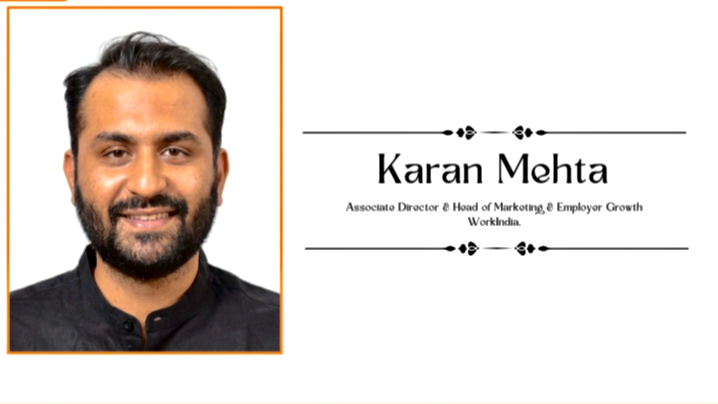
NATIONAL, 27 MAY, 2026, GPN/ By Mr. KARAN MEHTA:
In today’s digital-first world, brands are no longer competing only with competitors. They are competing with notifications, reels, memes, trending audio, short videos, live commerce, and endless scrolling. Attention has become the most expensive currency in marketing, and most brands are losing the battle within the first three seconds.
Consumers today decide instantly whether a brand deserves their time. If the messaging feels slow, generic, or irrelevant, they move on without hesitation. This shift is fundamentally changing how marketing works in India.
For years, brands focused heavily on visibility. The assumption was simple: if consumers repeatedly saw a product, they would eventually engage with it. But the modern consumer behaves differently. Exposure no longer guarantees attention, and attention no longer guarantees trust.
The average digital user today is overloaded with information from every direction. As a result, people have subconsciously developed “scroll behaviour.”
They filter content at extreme speed, often making decisions emotionally before rationally. This means brands have only a few moments to create impact, establish relevance, and trigger curiosity.
The biggest mistake brands continue to make is prioritising volume over value. More ads, more content, and more campaigns do not automatically create stronger engagement. In fact, excessive communication often pushes consumers away. What works today is precision, saying the right thing, in the simplest way possible, at the right moment.
The rise of short-form content platforms has accelerated this behavioural shift. Audiences now expect communication to be visual, direct, fast, and emotionally engaging. Long explanations are being replaced by sharp storytelling. Consumers no longer want to “understand” brands slowly; they want to “feel” brands instantly.
This is why authenticity has become a powerful differentiator. Modern audiences can quickly identify manufactured messaging. They connect more deeply with brands that sound human, relatable, and clear. In an era of shrinking attention spans, simplicity is not weakness, it is strategy.
Another major shift is the rise of mobile-first behaviour across India. For millions of users, the smartphone is the primary gateway to information, shopping, entertainment, and decision-making. This has transformed how brands design experiences. Every second of loading time, every unnecessary click, and every confusing interface directly impacts engagement.
The future of marketing will belong to brands that reduce friction. Consumers do not want complicated journeys. They want speed, clarity, and convenience. The brands winning today are not necessarily the loudest; they are the easiest to understand and interact with.
Data and technology are also reshaping marketing decisions. Brands now have access to deeper consumer insights than ever before. But the real advantage is not in collecting data, it is in interpreting human behaviour correctly. Successful marketing today is less about selling products and more about understanding intent.
At the same time, emotional relevance remains irreplaceable. People may forget campaigns quickly, but they remember how brands make them feel. This is especially true in India, where cultural nuance, language familiarity, relatability, and trust heavily influence consumer behaviour.
As attention spans continue to shrink, brands must stop thinking like advertisers and start thinking like experience creators. Every interaction, whether it is a notification, a social media post, a landing page, or a customer support conversation, shapes perception.
The reality is simple: consumers are no longer giving brands unlimited chances to impress them. The window of attention is becoming smaller every day. Brands that adapt to this shift with speed, simplicity, authenticity, and relevance will survive and grow. Those who continue relying on outdated communication strategies risk becoming invisible in the digital noise.In the end, the future of marketing may not belong to the brands that speak the most. It will belong to the brands that are understood the fastest.

Be the first to comment on "Brands Have 3 Seconds: Marketing Strategies That Survive India’s Shrinking Attention Spans -By Mr. Karan Mehta, Associate Director & Head of Marketing & Employer Growth, WorkIndia"