
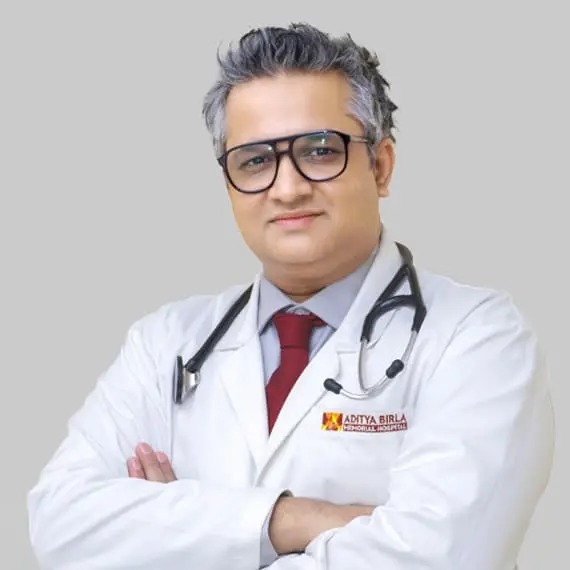
Dr. Avinash Munde, Senior Consultant, Internal Medicine and Head, Accident & Emergency Department at Aditya Birla Memorial Hospital, Pune
In an Emergency, the First 5 Minutes Decide Everything — First Aid Can Save a Life
MUMBAI, 8 SEPTEMBER, 2025 (GPN/BY: Dr. Avinash Munde, Senior Consultant, Internal Medicine and Head, Accident & Emergency Department at Aditya Birla Memorial Hospital, Pune):In every medical emergency, the first five minutes are critical. Doctors call this the “golden window,” a brief but decisive period when timely intervention can mean the difference between life and death. Yet in India, a country of 1.4 billion people, most citizens remain unequipped with even the most basic first aid skills.
Experts estimate that thousands of lives could be saved each year if ordinary people acted quickly in those first few minutes. This World First Aid Day, the call is clear: knowledge, calmness, and a few simple steps can save countless lives.
The Aim, Philosophy, and Responsibilities of First Aid
First aid is about reducing the impact of illness or injury before professional help arrives. Its philosophy is simple: protect life, prevent deterioration, and promote recovery. At its core lies the ABC principle – Airway, Breathing, and Circulation (or bleeding control)—the foundation of all emergency response.
But first aid goes beyond technical steps. A first aider saves lives by shielding patients from further harm, stabilizing injuries, and supporting recovery. Equally vital are non-medical skills: ensuring safety, staying calm, and making quick, confident decisions under stress.
Understanding Biological Hazards
However, stepping forward to help is not without risks. Blood, body fluids, and human tissue can carry infections, transmitted through cuts, punctures, or mucous membranes. This makes universal precautions vital, like wearing gloves if available, treating every patient as potentially infectious, washing thoroughly after contact, and safely disposing of protective gear. Only when the rescuer is safe can they help effectively.
The Primary Survey: First Checkpoints
Once safety is ensured, the first aider must assess systematically. The primary survey begins with a scene check: Is the environment safe? What caused the injury? How many casualties are there? Next comes activating help – calling 108 in India. Only after this can the patient be assessed for airway, breathing, circulation, and consciousness. If time allows, a secondary survey follows, including vital signs, a head-to-toe examination, and patient history.
Airway, Breathing, and CPR
Airway management is the immediate priority, especially in unconscious patients. A head-tilt–chin-lift can reopen a blocked airway, while a finger sweep is done only if a foreign object is visible. Breathing is checked by looking, listening, and feeling. If absent, rescue breaths or cardiopulmonary resuscitation (CPR) may be needed.
CPR is one of the most powerful life-saving skills. The standard cycle is 30 chest compressions followed by 2 breaths. If breaths aren’t possible, compression-only CPR at about 100 compressions per minute is still highly effective. Techniques differ for adults, children, and infants, but the goal remains the same: to keep oxygen and blood flowing until advanced help arrives. CPR should only be avoided in rare cases, such as danger to the rescuer, obvious death, or injuries incompatible with survival.
The Chain of Survival in Cardiac Arrest
These steps link to a larger concept: the Chain of Survival. In cardiac emergencies, survival depends on early recognition, calling EMS, starting CPR, defibrillation, and advanced care. Recognizing heart attack symptoms like chest heaviness, pain radiating to the arm or jaw, and shortness of breath can save precious time. The immediate actions should be to stop activity, call 108, rest comfortably, loosen clothing, and prepare for CPR or an AED if available.
Managing Choking
Not all emergencies involve the heart; airway blockages are equally dangerous. If a person can cough strongly, let them continue. If the cough weakens, apply five back blows followed by abdominal thrusts. If unconsciousness occurs, begin CPR immediately. Even when alone, a person can press their abdomen against a chair’s backrest or use their own hands for self-thrusts.
Controlling Bleeding and Treating Wounds
Uncontrolled bleeding is a leading cause of preventable death. Direct pressure with a cloth, dupatta, or bandage is the first response. If that fails, a pressure bandage or tourniquet may be the last resort. Keeping the patient calm, warm, and flat helps prevent shock.
External wounds should be covered with sterile dressings, fractures immobilized without resetting bones, and circulation checked before and after splinting. Suspected spinal injuries require rigid immobilization to prevent paralysis.
Drowning and Burns
Water and fire bring their own dangers. In drowning cases, if the victim isn’t breathing, start CPR immediately. If breathing is present, place them in the recovery position and keep them warm.
Burns, common in Indian households, must be treated carefully. Minor burns should be cooled under running water and covered with sterile gauze. Severe burns require clothing removal around the wound (without pulling stuck fabric), sterile covering, and shock treatment. Harmful remedies, such as applying oil, ghee, or toothpaste, or breaking blisters, should always be avoided.
Everyday Emergencies, Lifesaving Hacks, and Myths to Avoid
Many life-threatening emergencies happen at home, like choking, poisoning, electrocution, or burns. In such moments, everyday items can become lifesavers: a scarf as a bandage, a chair’s back for self-Heimlich, cardboard as a splint, or a plastic bottle as a chest seal.
But quick thinking must be matched with correct knowledge. Outdated practices like pouring oil on burns, giving water to the unconscious, delaying ambulance calls, or shaking seizure victims can do more harm than good. Awareness, improvisation, and proper training together save lives.
This World First Aid Day, the message is clear: you don’t need a medical degree to save a life, just right knowledge, calmness, and the courage to act.

Be the first to comment on "The First Five Minutes: Why First Aid Skills Can Save Thousands of Indian Lives Every Year"