
- India’s Plastic Recycling Market expected to grow at 9–11% CAGR over the next 5–10 Years
- USD 11.71 Billion Recycled Plastics Market by 2031, growing at 8.6% CAGR
- USD 14 Billion+ Metal Scrap, E-Waste and Battery Recycling Sector
- India imports around USD 2.5 billion worth of lithium and cobalt annually
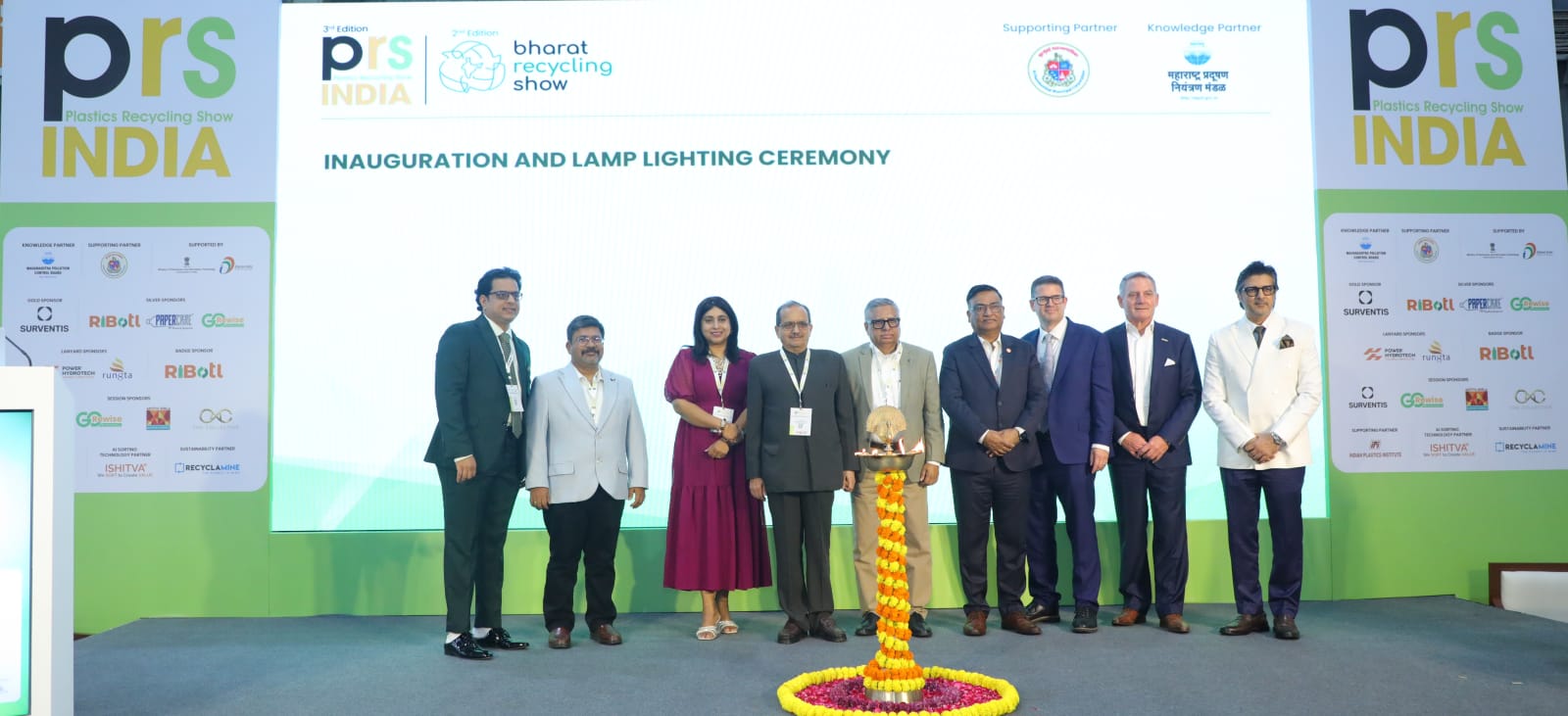
MUMBAI, NATIONAL, SEPTEMBER 01, 2026 | GPN, SACHIN MURDESHWAR: Plastics Recycling Show India (PRS India) 2026 and Bharat Recycling Show (BRS) 2026 opened at the Bombay Exhibition Centre, Mumbai, bringing together the recycling industry and resource recovery ecosystem under one roof. Organised by Media Fusion & Crain Communications, the co-located shows feature participation across plastics, metals, e-waste, batteries, end-of-life vehicles and tyre recycling, showcasing innovative technologies and solutions. The three-day event will continue through September 2, 2026, featuring exhibitions, industry discussions, technology demonstrations and networking opportunities.
The 2026 edition has witnessed strong industry participation, with more than 150 exhibitors and over 250 brands participating across the three-day event. The shows are expected to attract more than 10,000 visitors over three days, with participation from recyclers, packaging brands, producers, technology suppliers, policymakers and investment leaders. The event was inaugurated in the presence of prominent industry representatives, including Dr. Jairaj Phatak, IAS (Retd.), Director-General, All India Institute of Local Self-Government (AIILSG); Ms. Shilpashree Muniswamappa, Director – ESG & Communications, Colgate-Palmolive (India); Mr. Bipin Odhekar, Head – Sustainability & EHS, Marico Limited; Mr. S.K. Nayak, Independent Consultant/Advisor, SKN Consultancy; Prabodha Acharya, Chief Sustainability Officer, JSW Green Steel (JSW Group); Mr. Matthew Barber, Global Events Director and Sales Director, Crain Communication; Mr. Ton Emans, President, Plastic Recyclers Europe and Mr. Taher Patrawala, Managing Director, Media Fusion, among other industry representatives.
Strong Industry Participation
The second edition of Bharat Recycling Show spans ferrous and non-ferrous metals, e-scrap, batteries, ELVs and tyre recycling, featuring advanced machinery, automation, processing solutions and live demonstrations. Key exhibitors include Power Hydrotech, Hysan Balers, Advance Hydrautech, Landbell Group, and Linux Magnetics among others. Meanwhile, Plastics Recycling Show India 2026 focused on EPR, circularity, AI, digital traceability and sustainable packaging. The PRS India exhibition features leading names including Ishitva Robotics, Dalmia Polypro, Srichakra Polyplast, Lets Recycle and Gemcorp among others. The co-location of BRS and PRS India enables cross-sector collaboration and knowledge exchange across the wider recycling ecosystem.
Mr. R.V. Sridhar, Senior Advisor, McKinsey & Company, said “The next phase of India’s recycling growth will be shaped by quality, traceability and technology, rather than volumes alone. India’s copper demand is expected to rise to around 3.2 million tons by 2030 from approximately 1.9 million tons today, while scrap already meets nearly 38% of current copper demand, underscoring the growing role of secondary metals. At the same time, e-waste offers significant potential, but improving collection remains critical. The biggest technological opportunity lies in sensor-based sorting using XRF, LIBS and machine vision, which can improve feedstock quality and enable higher-value material recovery. Ultimately, the industry needs to recognise that ‘quality is bought at the yard, not in the refinery’ better sorting, stronger traceability and economically viable processing will be key to scaling India’s circular economy.”
Ms. Shilpashree Muniswamappa, Director – Communications & Sustainability, Colgate-Palmolive India, said, “As a market leader, we have a responsibility to ensure that what we put in consumers’ hands is not only the right product, but also the right packaging. Today, 100% of Colgate toothpaste tubes manufactured in India are recyclable, marking an important step towards greater circularity. Beyond packaging, we have worked with 158 villages over the last three years, collecting more than 90,000 kg of dry waste and channelising it into recycling and reuse streams, while working with children to promote waste segregation and drive behavioural change. With around 60% of our electricity currently sourced from renewables and a goal of reaching 100% by 2030, we are focused on advancing circularity across our operations, communities and value chain.”
Mr. Shailendra Singh, Director General, Association of Plastic Recyclers, Bharat, said, “India’s plastic recycling ecosystem has undergone a significant transformation over the past decade, supported by stronger regulations such as EPR and recycled-content mandates, increased investment and the adoption of world-class technologies. We expect the market to grow at around 9–11% CAGR over the next five to ten years, driven by rising demand for recycled plastics. However, collection, source segregation and the integration of the informal sector into the formal recycling economy remain critical challenges. The emergence of design for recycling is another important development that can fundamentally improve the recyclability of packaging. Recent volatility in virgin polymer prices has also highlighted India’s dependence on imported petrochemicals, reinforcing the strategic importance of recycled plastics in strengthening resource security and self-reliance. Overall, the outlook for India’s plastic recycling industry is highly positive, provided the ecosystem continues to address these structural gaps.”
Mr. Prabodha Acharya, Chief Sustainability Officer, JSW Group, said “Recycling is central to building a sustainable and resource-efficient economy, as it enables us to turn waste into valuable inputs for future growth. At JSW, we are pursuing multiple pathways to reduce our environmental footprint, including converting steel slag into cement, reducing the need for clinker and creating value from waste. In steel, we have already reduced emissions intensity by 30% and are targeting a 42% reduction by 2030, with an ambition to achieve net neutrality by 2050. Steel scrap recycling will be an important part of this journey, the steel we make today will become a resource for tomorrow, complemented by renewable energy, resource efficiency and technological innovation. Today, around two-third of JSW Energy’s portfolio is renewable, reflecting our broader commitment to accelerating India’s transition towards a low-carbon and circular economy.”
Ms. Kiarah Ahuja, General Manager & Head – Business Development, Banyan Nation, said, “Banyan Nation has been working on India’s polyolefin recycling challenge since 2013, building one of the country’s earliest organised supply chains for high-quality HDPE recycling. Over the years, we have worked closely with informal collectors and aggregators to improve identification, segregation and recovery of plastic waste, enabling FMCG-grade recycled HDPE to move back into products through a ‘bottle to bottle’ circular model. Our Hyderabad facility today has 10,000 tons of annual capacity and we are scaling this to 50,000 tons through a new Bengaluru facility over the next four years. India’s 60% Category I mandate creates demand for well over two million tonnes of FMCG-grade rigid PCR, yet certified capacity today remains a small fraction of that requirement. As the market scales, the focus now needs to shift towards building reliable, certified recycling capacity and strengthening the supply chain that can consistently deliver high-quality FMCG grade PCR at scale. Ultimately, EPR can do for recycled plastic what renewable purchase obligations did for solar by creating the demand visibility needed to make collection infrastructure and recycling capacity commercially viable.”
Mr. Suyog Keluskar, Senior Director, IGS, 1Lattice, said “The next phase of India’s recycling industry will be defined by quality, specification and resource security, rather than simply processing more volumes. Battery recycling is emerging as the fastest-growing segment, driven by EV adoption and critical-mineral demand, with India currently importing around USD 2.5 billion worth of lithium and cobalt annually. The ₹1,500 crore incentive scheme under the National Critical Mineral Mission, with 58 companies approved and around 850,000 tons of annual capacity pledged, signals the scale of this opportunity. In parallel, high-specification plastics, formal e-waste processing and secondary refining of metals offer significant value-creation potential. India’s aluminium scrap imports alone cost around ₹40,000 crore in FY26, while recycled aluminium can use approximately 95% less energy than primary aluminium, highlighting both the economic and environmental case for recycling. The industry’s biggest gap, however, remains upstream: capital has funded processing capacity generously, while collection and aggregation have received far less attention. The next wave of investment must therefore focus on securing feedstock, improving purity and traceability, and deploying AI, sensor-based sorting and advanced refining technologies to produce recycled materials that can genuinely compete with virgin materials.”
Mr. Taher Patrawala, Managing Director, Media Fusion, said “The co-location of the Bharat Recycling Show and Plastics Recycling Show India marks a decisive step toward unifying India’s fragmented resource recovery ecosystem. As regulatory frameworks evolve and industries face increasing pressure to adopt sustainable practices, BRS and PRS India provide the precise platform needed to bridge technology gaps, unlock investments, and foster cross-sector partnerships. Our objective is to catalyze India’s transition from a linear waste management model to a high-value, technology-driven circular economy.”
Promising Market Trends and Economic Growth
India’s recycling ecosystem is undergoing a significant transformation, driven by regulatory reforms, circular economy initiatives and rising demand for secondary raw materials. The recycled plastics market is projected to grow from USD 6.57 billion in 2026 to USD 11.71 billion by 2031, at a CAGR of 8.6%, supported by growing demand from the packaging and automotive sectors, improved waste collection and technology adoption. Meanwhile, the metal scrap, e-waste and battery recycling sector, valued at over USD 14 billion, is evolving towards more organised and technology-driven operations, with EPR mandates, recycled-content targets and growing demand for critical minerals accelerating investments in advanced processing and material recovery. Together, these trends are strengthening India’s circular economy and creating opportunities for innovation, resource efficiency and sustainable growth across the recycling value chain.

Be the first to comment on "Plastic Recycling Show India and Bharat Recycling Show 2026 Showcase India’s Shift Towards a Technology-Driven Circular Economy"